
Chaos, shock, private keys from a not-so-private GitLab 💻
More in Supply chain
- Enterprise-grade validation system with schema support
Enterprise-grade validation system with schema support (c) The author of a dozen trojans who forgot to…
- Did someone say sandbox?
Someone said sandbox? 👀 Once again we're watching threat actors conduct unethical research. Given: Security researcher…
- Hello! The Supply Chain Security team is here
Hello! The Supply Chain Security group is here 🩷 We scan open source in real time…
- The attacker publishes .bash_history view without registration and SMS
Attacker publishes .bash_history watch without registration and SMS 😱 The Supply Chain Security team sent a…
- A logging library and an infostealer to boot? No thanks
A logging library and an infostealer to boot? No thanks 👋 A lot has happened recently.…

Over the past couple of months, the attacker has been distributing trojans from several npm accounts: alex05255, mdrafiqulislamrabby, b.w1001, abdev8773, and mollspotwood54400.
List of packages:
🌟 svg-fetcher
🌟 tradepilot
🌟 polytrade
🌟 polymarket-kit
🌟 react-svg-chunk
🌟 gamified-trading-system
🌟 font-huge
🌟 font-hub
🌟 mdb-vite
🌟 router-processor
🌟 route-processor
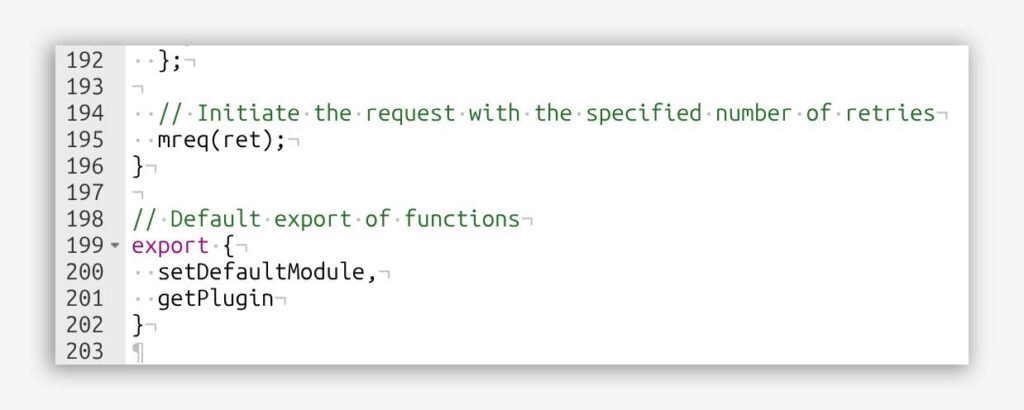
The code, as is typical of the genre, is vibe-coded. This is indicated by the excessive explanatory comments:
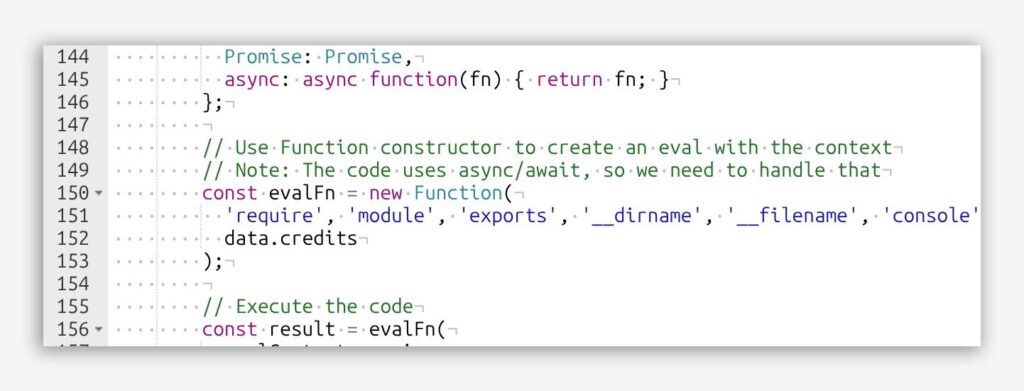
Package logic
🔗 Concatenation of the C2 URL from several constants.
🔗 Request for the next stage. Of note:
🌟The payload is versioned and referred to in the code as token. We know of stages 106, 107, 108, and 116.
Final URL: http://svganchordev.net/icons/<token>
🌟 The code passes the header key bearrtoken (spelling preserved, the author probably meant bearertoken) with the value logo.
The second stage is represented by heavily obfuscated one-liner JS code:
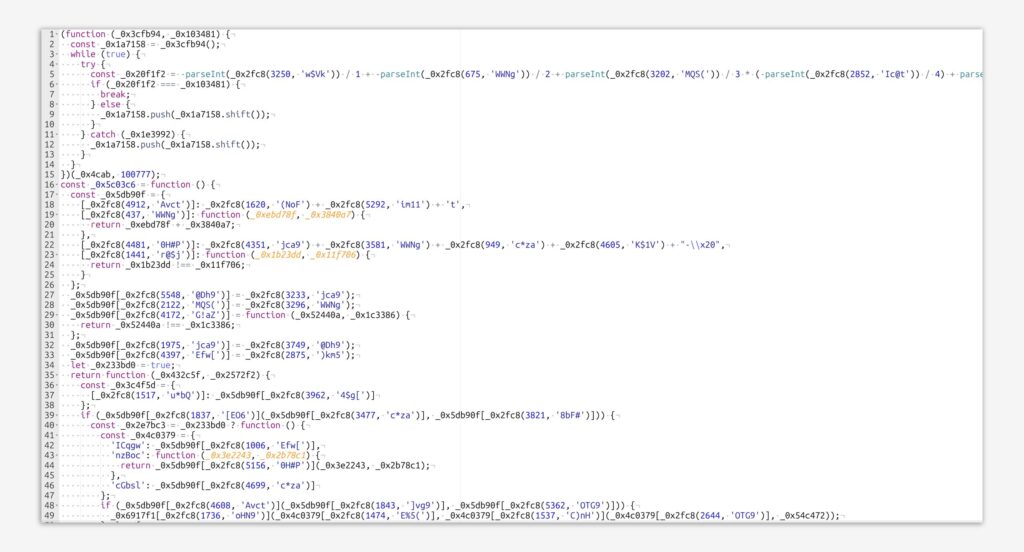
The stage collects system information — username, computer name, operating system — and continues communicating via a web socket, receiving commands for execution.
The implementation is solid, with multi-stages, no argument there. But it’s still malicious activity, so we’re reporting the packages to the NPM admins 🫥
The releases with tokens 106 and 116 have a twist, namely embedded GitLab public and private keys:
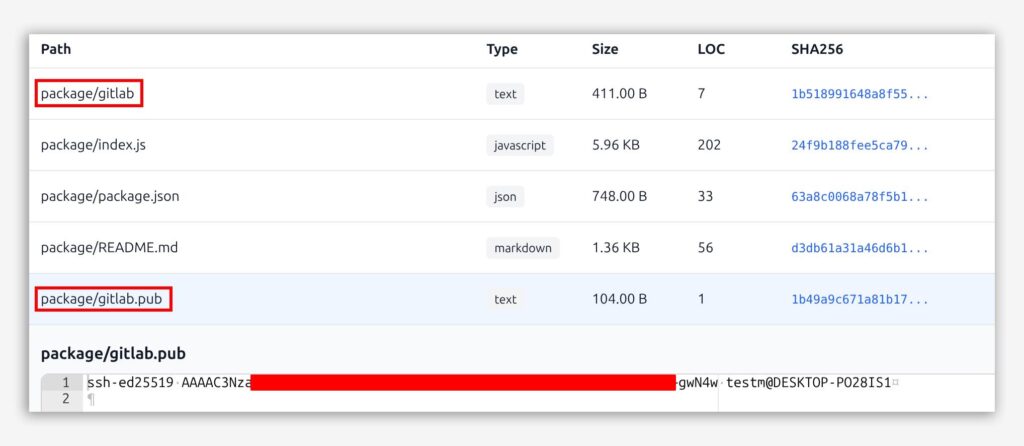
We can’t use these keys: they belong to a private GitLab instance deployed in the attacker’s infrastructure.
However, it’s interesting that the campaign is conducted at such a serious level that the attacker needed code versioning, even though Git could have been used locally. One can assume that a CI/CD pipeline is set up in GitLab for obfuscating code and publishing stages.
Want to automatically check whether these and other malicious packages have made it into your environment? Go here: secure development feeds from PT Fusion.
#npm #scs
More from global_author
- This is Siemens...
Recently, our colleagues from the Positive Industrial Expertise Center discovered a curious Windows sample on MalwareBazaar.…
- Anti-antivirus
Recently, we came across an APK with an intriguing and trust-inspiring name: «Антивирус ФСБ.apk». After installing…
- .exe .docm .xlsm
.exe .docm .xlsm Malicious files with these extensions are most often found in corporate network traffic.…
- ::%16777216 — so what exactly are you?
::%16777216 — so what exactly are you? It is known that during attacks, adversaries can use…
- Hello! The Supply Chain Security team is here
Hello! The Supply Chain Security group is here 🩷 We scan open source in real time…



More in Supply chain
- Enterprise-grade validation system with schema support
Enterprise-grade validation system with schema support (c) The author of a dozen trojans who forgot to…
- Did someone say sandbox?
Someone said sandbox? 👀 Once again we're watching threat actors conduct unethical research. Given: Security researcher…
- Hello! The Supply Chain Security team is here
Hello! The Supply Chain Security group is here 🩷 We scan open source in real time…
- The attacker publishes .bash_history view without registration and SMS
Attacker publishes .bash_history watch without registration and SMS 😱 The Supply Chain Security team sent a…
- A logging library and an infostealer to boot? No thanks
A logging library and an infostealer to boot? No thanks 👋 A lot has happened recently.…